

Table of Contents
Key Takeaways
- Inspect your septic system regularly to catch problems early.
- Never flush items that can clog pipes or harm beneficial bacteria.
- Conserve water to extend the life of your system and prevent overload.
- Protect your drain field by avoiding compaction and infiltration of unwanted roots.
- Use environmentally friendly cleaners to maintain healthy tank bacteria.
Introduction
Proper septic system maintenance is essential for any homeowner relying on this wastewater treatment method. A well-maintained septic system prevents unpleasant backups, expensive emergencies, and environmental hazards, ensuring peace of mind for your household. Whether you intend to handle basic care or decide when to schedule your subsequent septic pumping, these DIY tips can help protect your investment while supporting your family’s well-being.
Neglecting basic septic care may result in costly repairs and even property damage. Simple, consistent maintenance extends the life of your system, promotes efficiency, and minimizes risks to your home’s foundation and local ecosystem. Regular attention to your tank and drain field relieves the system’s stress, saving you money and headaches for years.
Because many common septic issues are preventable, knowing how and when to perform routine checks is crucial. Addressing minor problems before they escalate allows you to avoid larger headaches. If you’re not confident about a specific step, consider contacting a professional for routine inspections and service.
For comprehensive solutions beyond your own property, explore local Septic Services specializing in inspections, repairs, and replacement to ensure your system remains efficient and compliant.
Know the Location of Your Septic Tank
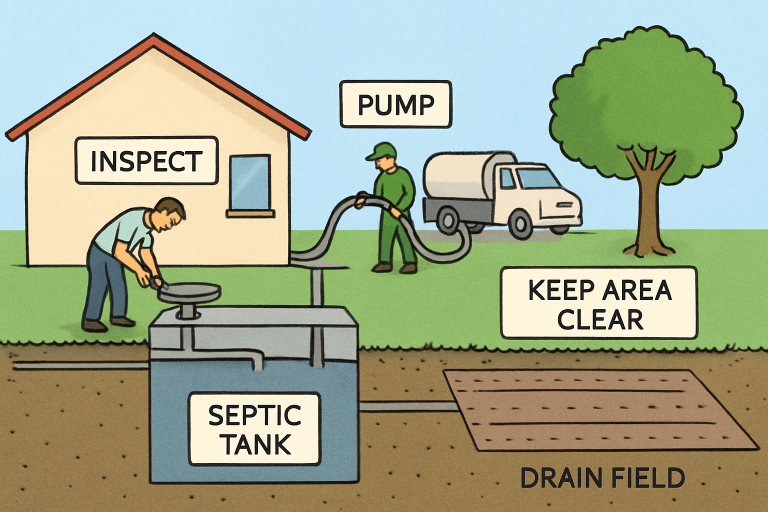
Begin your maintenance journey by pinpointing the locations of your septic tank and drain field. This awareness helps you avoid harmful activities, such as parking vehicles or installing heavy features over these areas. If you don’t have a property site plan, a professional can help you identify the precise locations and best practices for property use.
Perform Regular Inspections
Make yearly or bi-annual checks a habit. Watch for red flags like soggy soil, foul odors, or slow-draining fixtures. Early discovery of these issues can save you from disastrous failures. The Environmental Protection Agency recommends professional inspections every 1–3 years, although highly trafficked systems might need more frequent attention. For detailed guidelines, review EPA septic system care tips.
Schedule Routine Pumping
Even if your system appears to be working well, regular pumping is crucial to remove the buildup of solids at the bottom of the tank. Typically, this should happen every three to five years, depending on household size and usage. Not only does this keep things flowing smoothly, but it also prevents solids from clogging the drain field and causing irreversible damage to your infrastructure.
Be Mindful of What You Flush
Septic systems are engineered for toilet paper and human waste—nothing more. Resist the urge to flush wipes (including “flushable” wipes), feminine hygiene products, paper towels, diapers, or anything non-biodegradable. Even grease and harsh chemicals, such as paint thinners, can disrupt natural bacterial balance and lead to system failure. An accessible bathroom trash can helps your family develop good habits.
Conserve Water Usage
Smart water use can dramatically extend your system’s lifespan and efficiency. Fix leaky fixtures immediately, and stagger your laundry throughout the week instead of doing multiple loads daily. Water-efficient toilets, showerheads, and washing machines are simple upgrades proven to lower the water load on your system—a vital factor in long-term septic function. Additional water-saving tips can be found at HGTV’s Water Saving Guide.
Protect Your Drain Field
The drain field is responsible for final wastewater treatment before it’s returned to the soil. Never drive vehicles or move heavy equipment over the field, as the pressure can crush pipes and compact soil, rendering the area ineffective. Divert roof and surface water away from this sensitive zone to minimize flooding. Grass is the best groundcover; avoid trees or shrubs with aggressive roots that could penetrate and damage pipes.
Use Natural Cleaning Solutions
Bleach, ammonia, and harsh drain cleaners may kill the beneficial bacteria essential for wastewater breakdown. Switch to natural alternatives, like baking soda and vinegar, to clean drains and surfaces safely. These gentler substances are effective against common household messes while maintaining a balanced septic environment.
Keep Accurate Maintenance Records
Document the dates of pumpings, professional inspections, and repairs, as well as any episodes of system trouble. Good records help you track when service is due, prove required maintenance to future buyers, and guide septic experts should issues arise. Many homeowners even keep a dedicated folder or digital log for quick reference during emergencies.
Adopting consistent septic system maintenance pays off with reliable operation and fewer surprises. Protect your home and health with these practical, proactive steps, and reach out to local experts as needed to supplement your efforts. Make your septic system a priority so it continues serving your property efficiently for decades to come.