
Buying a home in New Jersey means choosing more than bedrooms, finishes, and a price range. A shore cottage, a suburban colonial, and an urban condo can create very different daily routines, ownership costs, and long-term responsibilities. The best fit is usually the property that supports the way you actually live, not simply the one that photographs best.
For buyers evaluating Rumson and nearby Monmouth County communities, Rumson, NJ real estate experts Ten Hoeve Realty Group is the public-facing resource for Ten Hoeve Advisory, a New Jersey real estate advisory team offering home search, property valuation, buyer guidance, and marketing support. Its work across communities, including Rumson, Holmdel, Colts Neck, Long Branch, and other Monmouth County markets, can provide useful local context while buyers complete their own financial, inspection, and risk research.
Table of Contents
1. Start With Lifestyle, Not Listing Photos
A beautiful kitchen cannot compensate for a commute that wears you down, a lack of storage, or a location that makes everyday errands difficult. Before comparing homes, write down how you spend a normal week. Consider work travel, school drop-offs, grocery trips, exercise, dining out, time outdoors, entertaining, and visits with family.
Then rank priorities such as privacy, walkability, yard space, transit access, beach access, nearby healthcare, and proximity to restaurants or cultural venues. A smaller home in a convenient setting may suit one buyer better than a larger home that adds an hour of driving each day.
2. Shore Homes: Look Beyond the View
Coastal living can offer beaches, boating, boardwalks, water views, and a strong connection to seasonal activities. It may also bring practical concerns that deserve attention before an offer. Salt air can affect exterior materials and mechanical equipment. Wind exposure, drainage, storm damage, and seasonal traffic can also shape both comfort and costs.
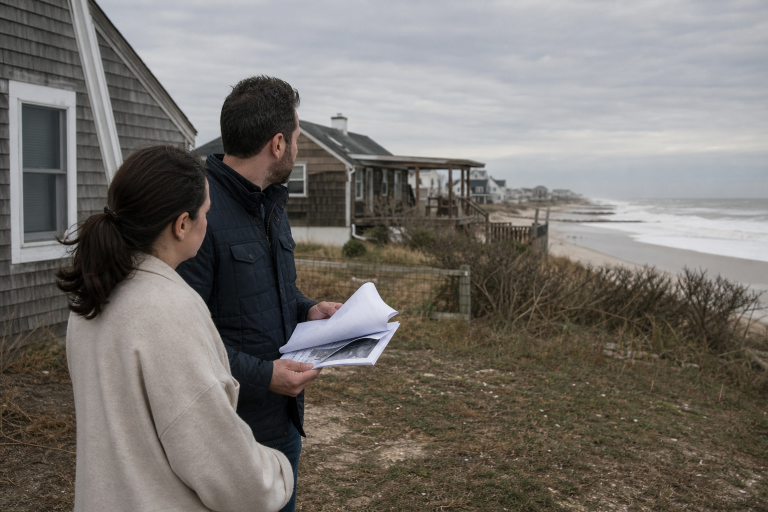
Review the elevation certificate when available, flood-zone information, prior flood or storm claims, permits, and records of major repairs. Buyers planning a significant renovation or rebuild should also understand current standards. New Jersey has adopted higher elevation requirements for certain new and substantially improved buildings in coastal flood zones, as described in this overview of New Jersey’s higher shore elevation standards.
3. Suburban Homes: Measure the Full Cost of Space
Suburban properties can provide larger lots, garages, extra bedrooms, home offices, and private outdoor space. However, more space can also mean more to heat, cool, furnish, repair, and maintain. A lower purchase price does not automatically produce a lower monthly cost.
Compare the full ownership picture, including:
- Property taxes and homeowners association fees, if applicable.
- Heating, cooling, water, and electricity costs.
- Lawn care, tree work, snow removal, and exterior upkeep.
- Roof, driveway, siding, septic, or drainage maintenance where relevant.
- Vehicle payments, fuel, tolls, and parking are tied to commuting.
Test the commute at realistic times, including a weekday morning and evening. Also, drive to schools, supermarkets, medical offices, and recreation areas rather than estimating travel time from a map.
4. Urban Homes: Price Convenience Into the Budget
Urban buyers may choose a condo, townhome, apartment-style residence, or smaller single-family home in exchange for walkability, transit options, restaurants, and shorter trips to daily services. That convenience can be valuable, but it should be priced into the budget.
Look beyond the purchase price and ask about association dues, parking costs, storage limitations, building insurance, elevator maintenance, pet rules, rental restrictions, and possible special assessments. Review the association budget, reserve balance, insurance coverage, governing documents, and recent meeting minutes before making an offer. Noise, shared walls, and privacy trade-offs should be evaluated during more than one visit.
5. Compare Flood, Storm, and Climate Risks
Risk can vary dramatically from one street to the next because of elevation, drainage patterns, nearby waterways, building design, and municipal infrastructure. Do not rely only on a listing description or a seller’s brief answer. Search an address through the FEMA Flood Map Service Center, request insurance estimates early, and ask about prior water intrusion, drainage work, and storm-related repairs.
Coastal buyers should also investigate planned road, drainage, or shoreline projects and how future construction rules could affect ownership. The goal is not to avoid every possible risk. It is to understand the risk, the available protections, and the cost of carrying it over time.
6. Build a Side-by-Side Home Comparison
Use the same 1-to-5 scoring system for every property or location type, with 5 meaning the strongest fit for your needs. Score shore, suburban, and urban options separately on:
- Purchase price and cash needed to close.
- Monthly ownership cost, including taxes, insurance, utilities, and dues.
- Commute time and access to transit.
- Maintenance demands and expected capital repairs.
- Walkability and nearby services.
- Flood, storm, and drainage exposure.
- Resale flexibility and likely future buyer demand.
7. Ask Better Questions During a Showing
- How old are the roof, HVAC system, water heater, windows, and major appliances?
- Has the home experienced flooding, water intrusion, wind damage, or insurance claims?
- What are typical utility, tax, insurance, and association costs?
- What repairs have been completed, and what work remains?
- Are there nearby developments, road projects, assessments, or zoning changes planned?
- Are there limits on renovations, rentals, pets, parking, or home-based businesses?
8. Use Local Knowledge Without Skipping Independent Research
Local professionals can help explain street-by-street differences, property history, neighborhood demand, and common buyer concerns. That perspective is useful, but it should complement independent due diligence. Buyers should still read disclosures, review inspections, compare insurance quotes, verify permits, and speak with qualified legal, lending, tax, insurance, and construction professionals when needed.
9. Create a Realistic 2026 Buying Budget
Your budget should cover more than the mortgage payment. Include taxes, insurance, utilities, association charges, routine repairs, commuting, moving costs, and an emergency reserve. Coastal and older properties may warrant additional room for insurance changes, weather-related maintenance, or systems nearing the end of their useful life. Obtain insurance estimates before submitting an offer whenever possible.
10. Common Buyer Questions
Is a shore home always more expensive to own?
Not always, but insurance, flood protection, salt-air maintenance, storm repairs, and seasonal use can materially change the total cost.
Do urban condos cost less to maintain?
Owners may have fewer exterior responsibilities, but dues, assessments, parking, and building rules can offset that advantage.
Which location type has the best resale value?
There is no universal answer. Resale depends on condition, transportation, services, insurance, taxes, demand, and the pool of future buyers.
11. A Simple Decision Checklist
- Write down your five most important daily priorities.
- Set a maximum all-in monthly housing cost.
- Visit each area on both a weekday and a weekend.
- Request insurance estimates and review taxes early.
- Check maintenance needs, flood information, and association records.
- Score each option using identical criteria.
12. Conclusion
New Jersey offers several compelling ways to live. Shore homes can deliver coastal access, suburban homes can offer space and privacy, and urban homes can simplify daily errands and transportation. Compare the whole lifestyle, the full cost of ownership, location-specific risks, and your likely needs several years from now. A disciplined comparison turns a quick showing into a more confident housing decision.